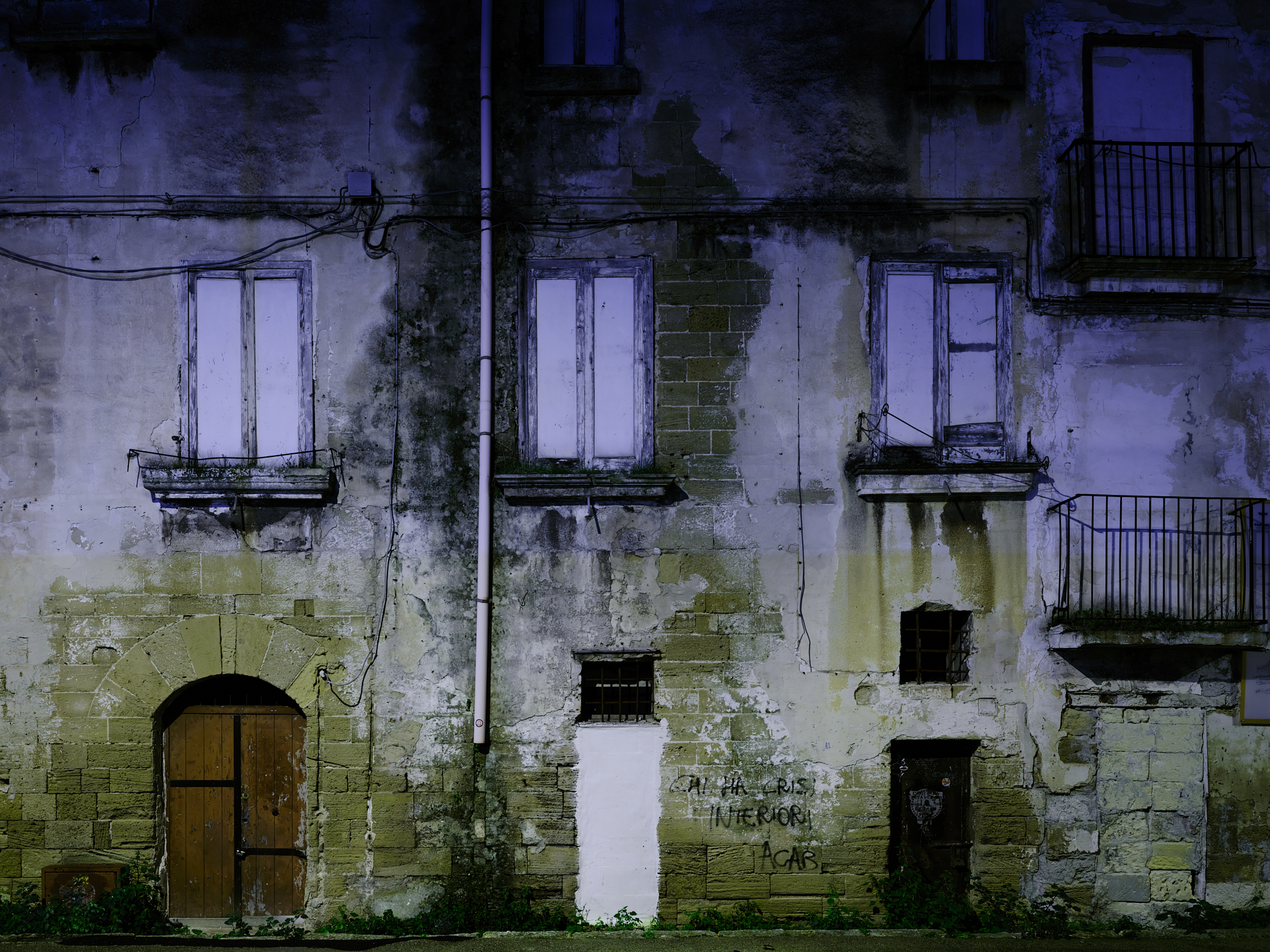
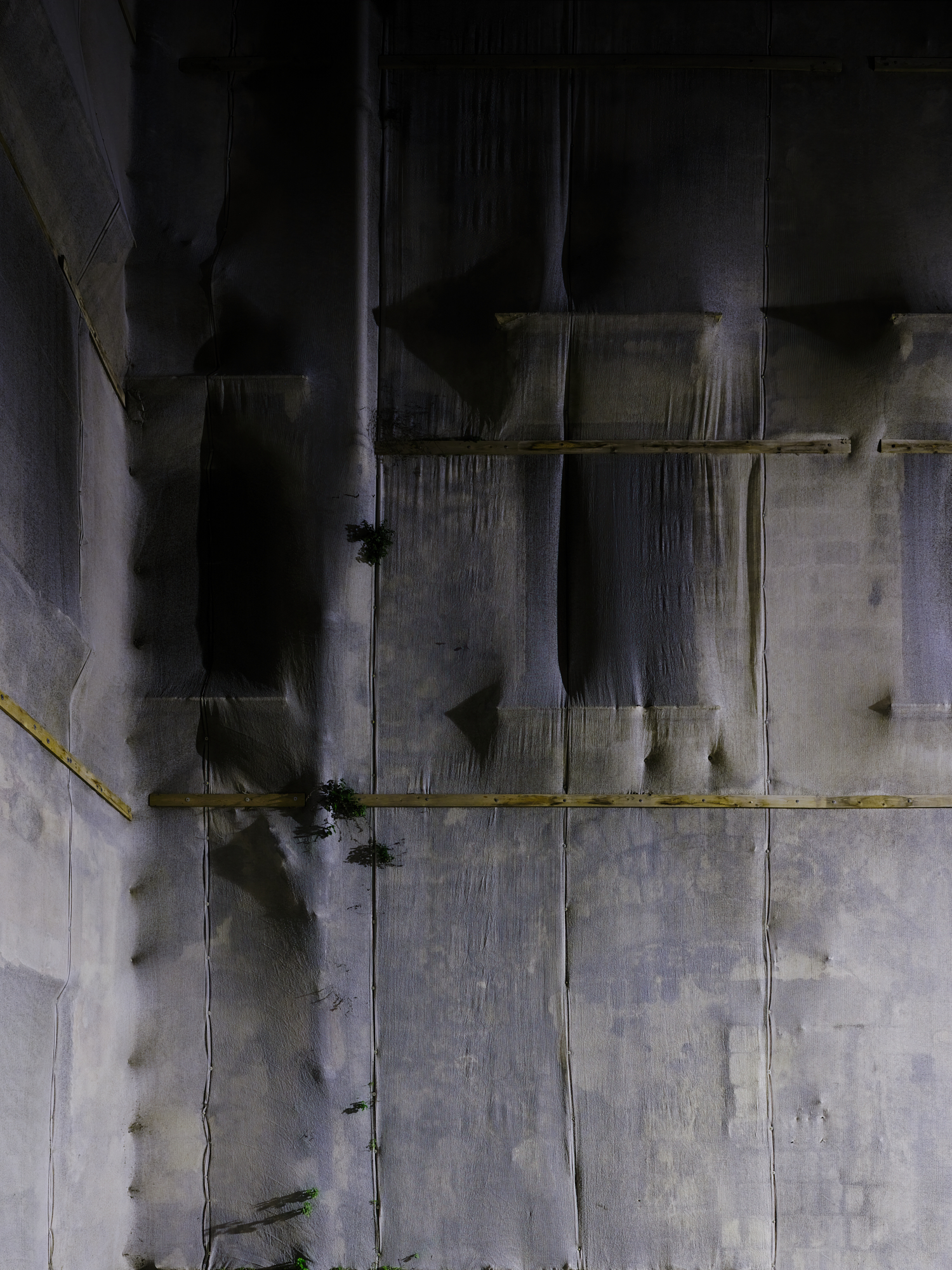
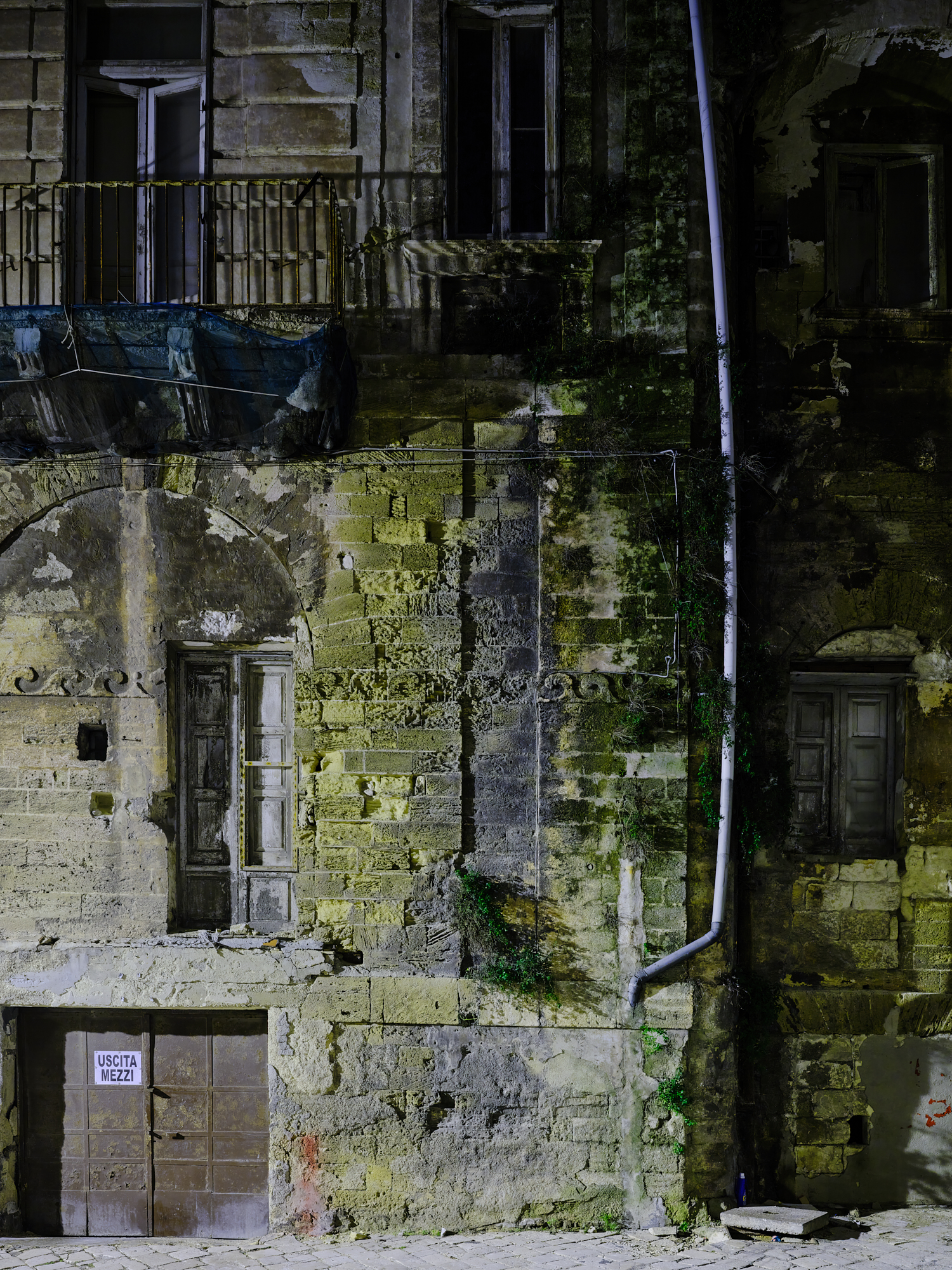
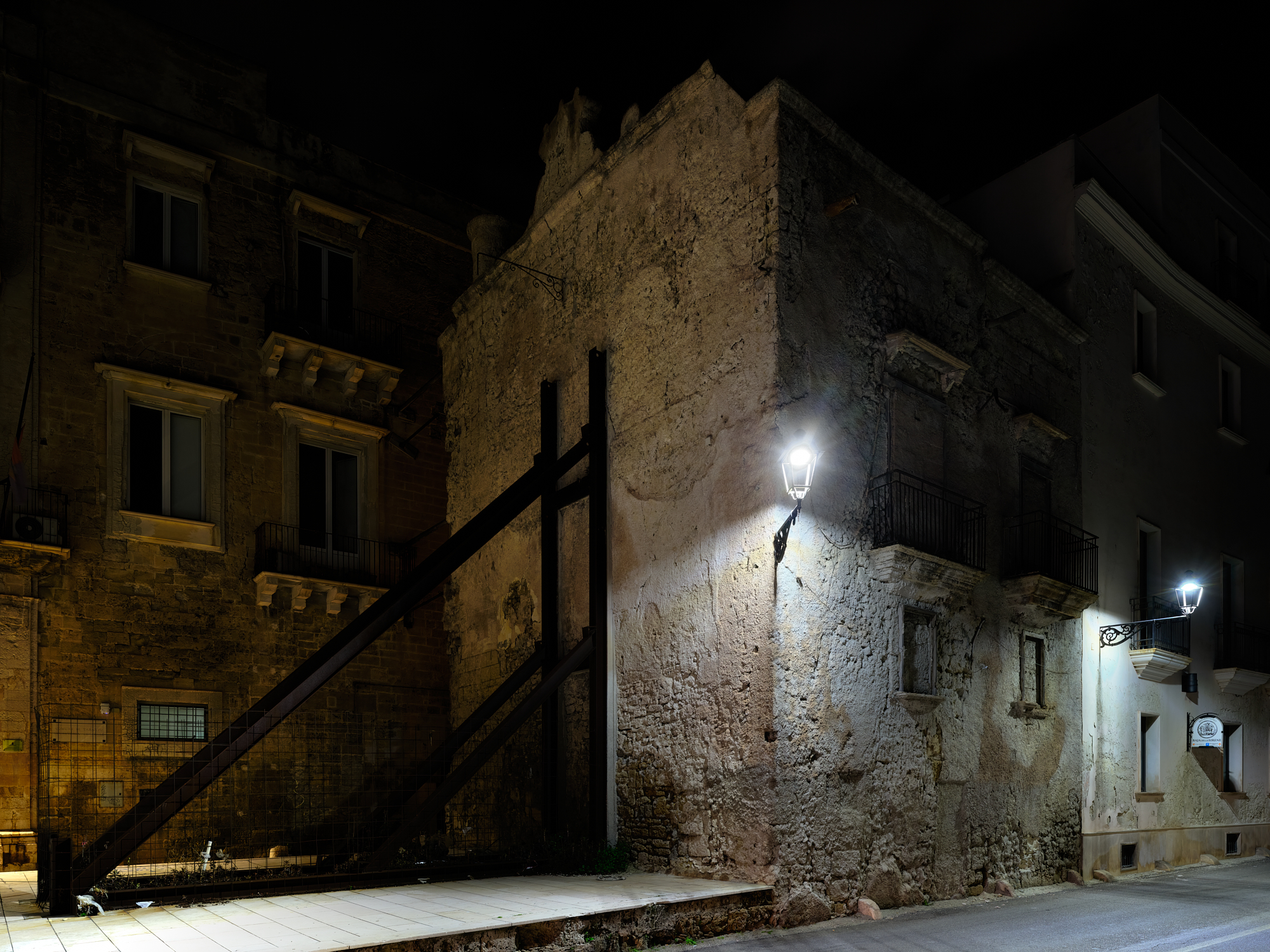
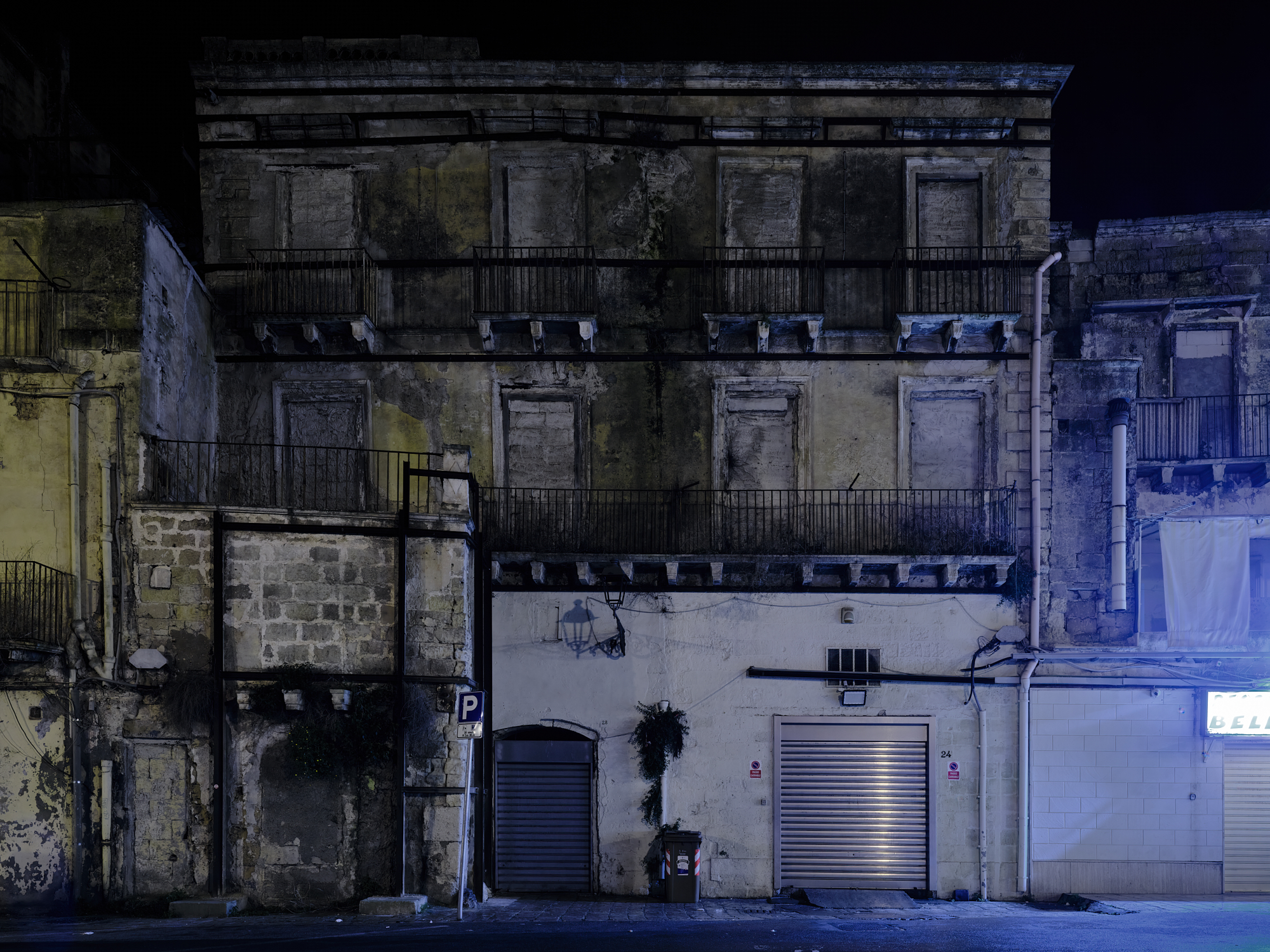
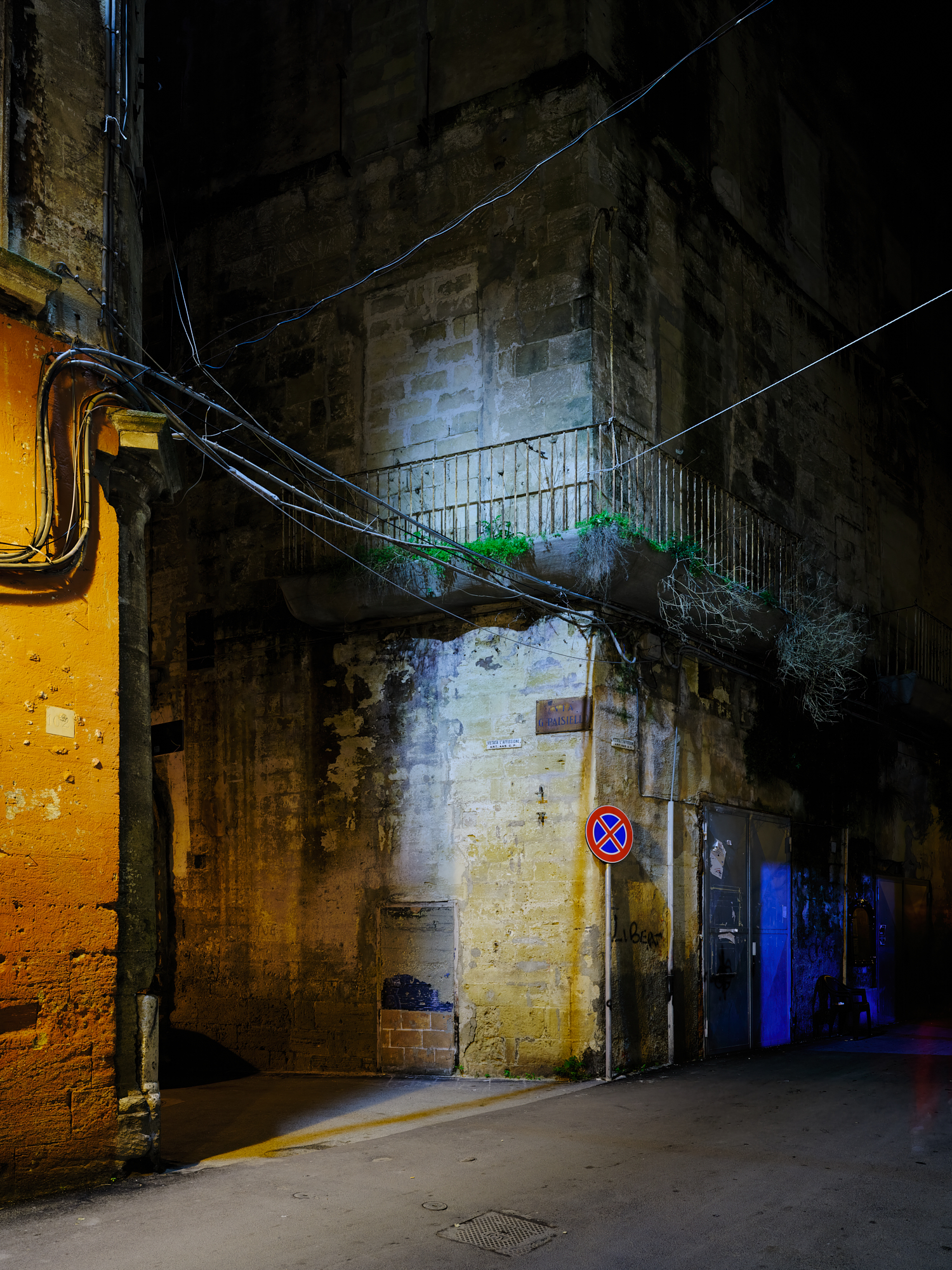
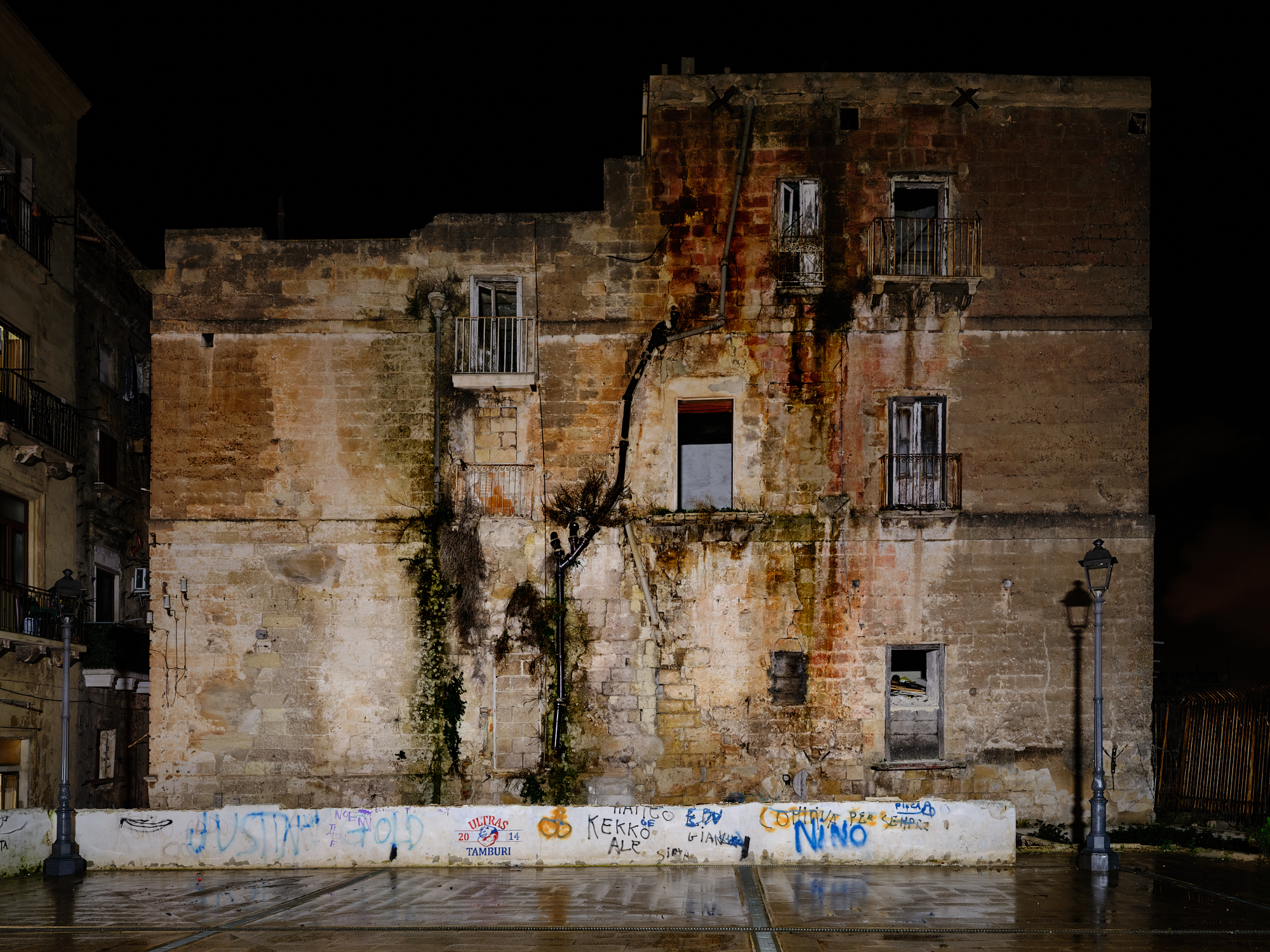
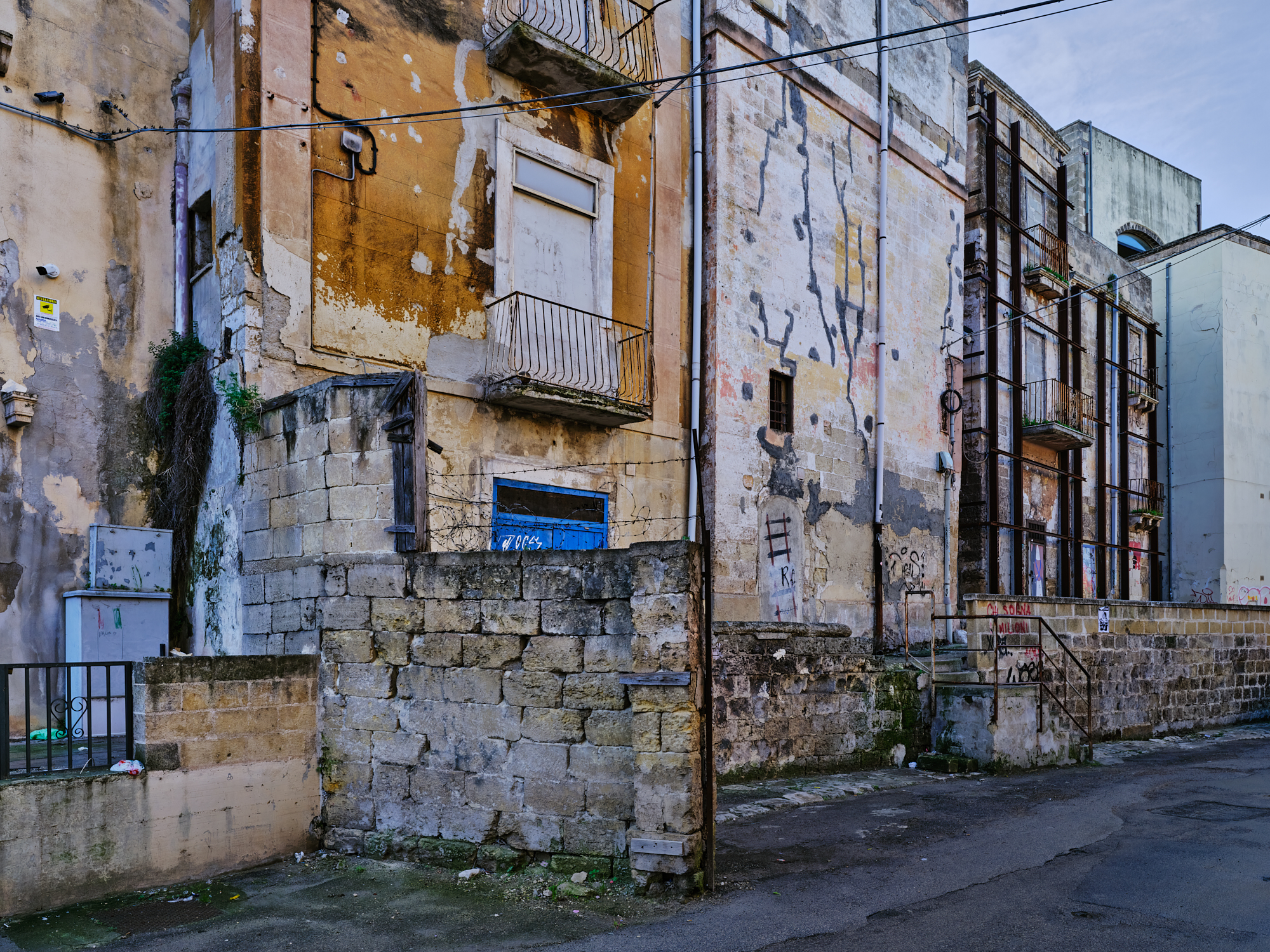
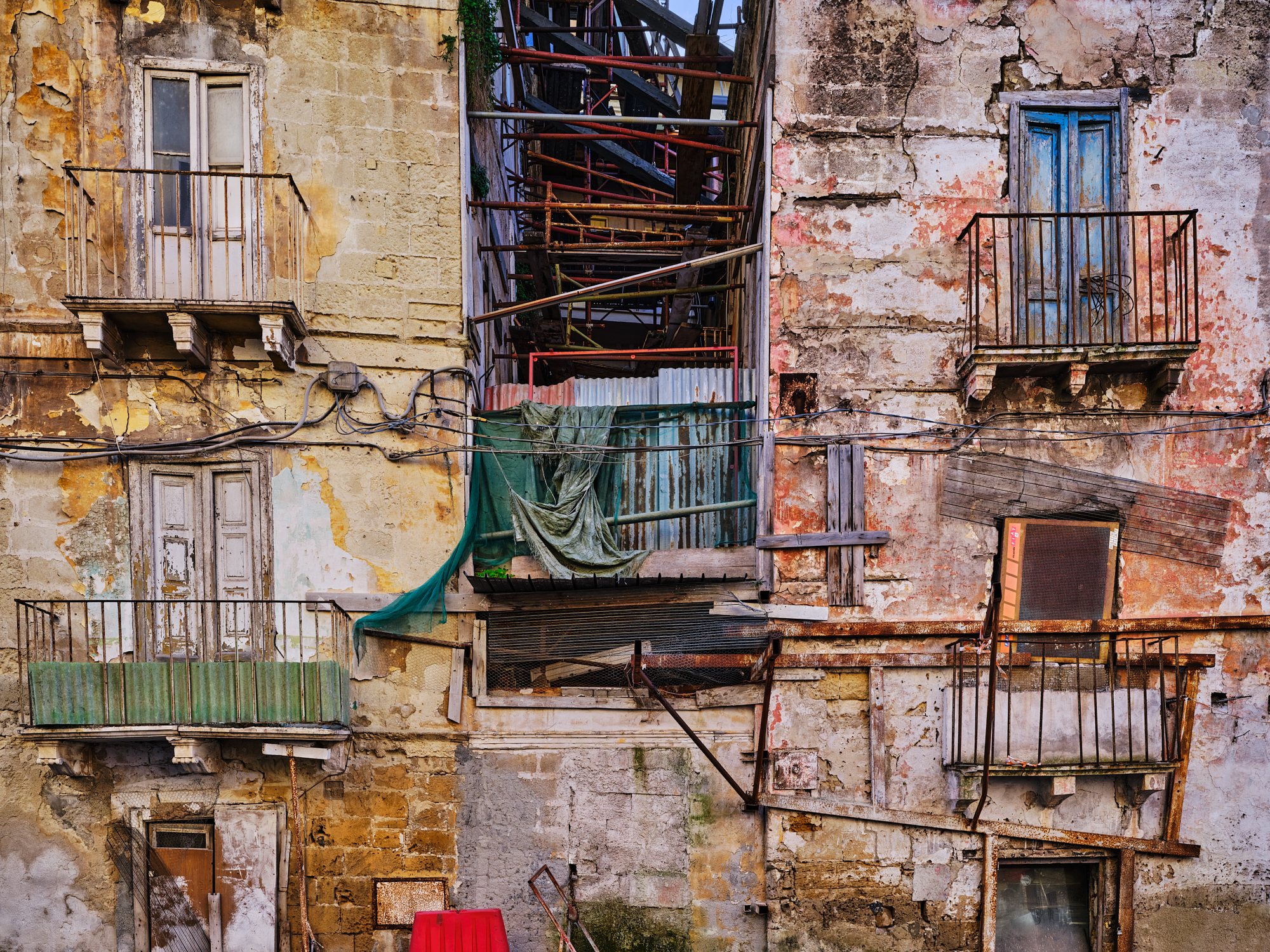
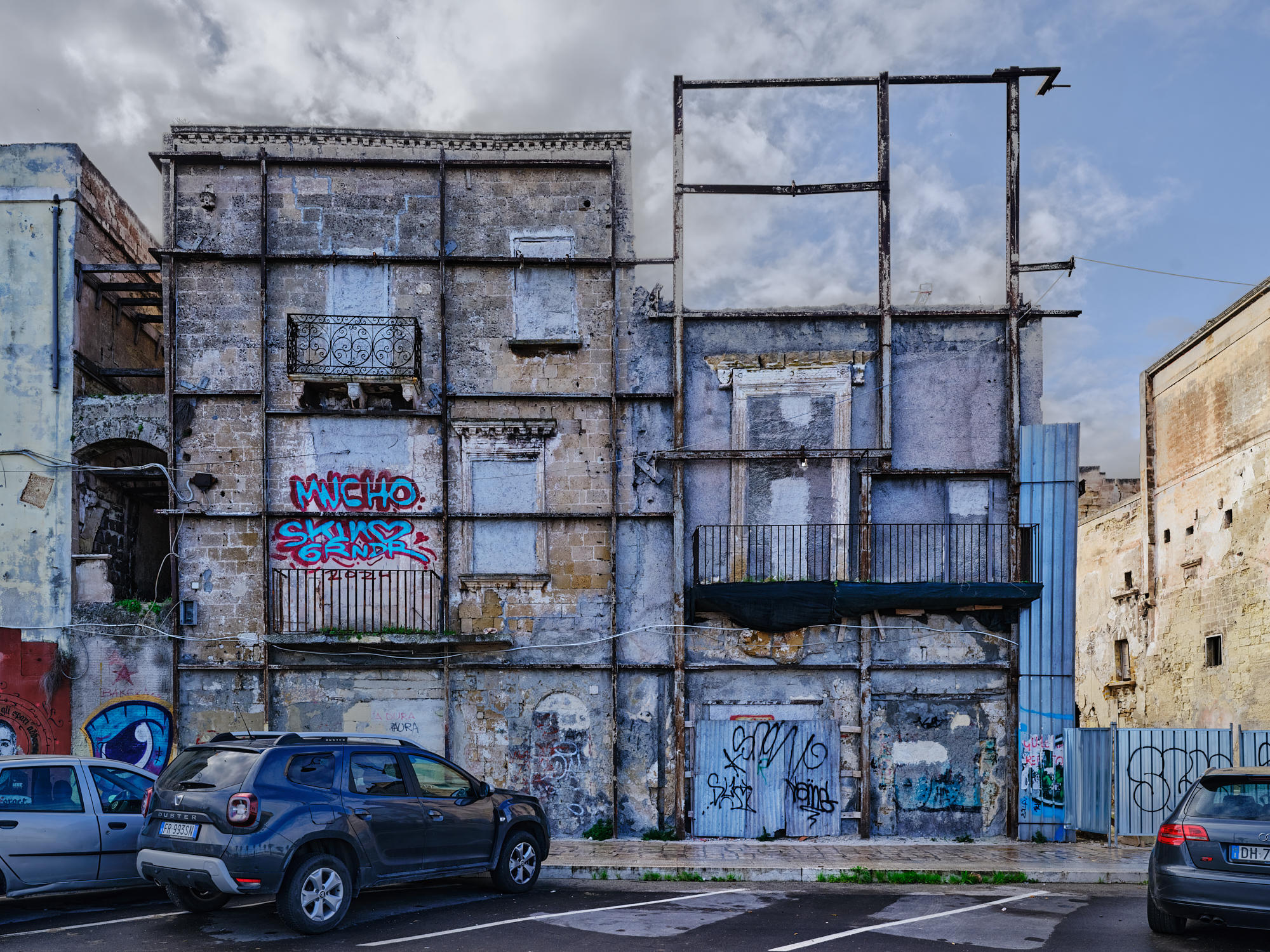
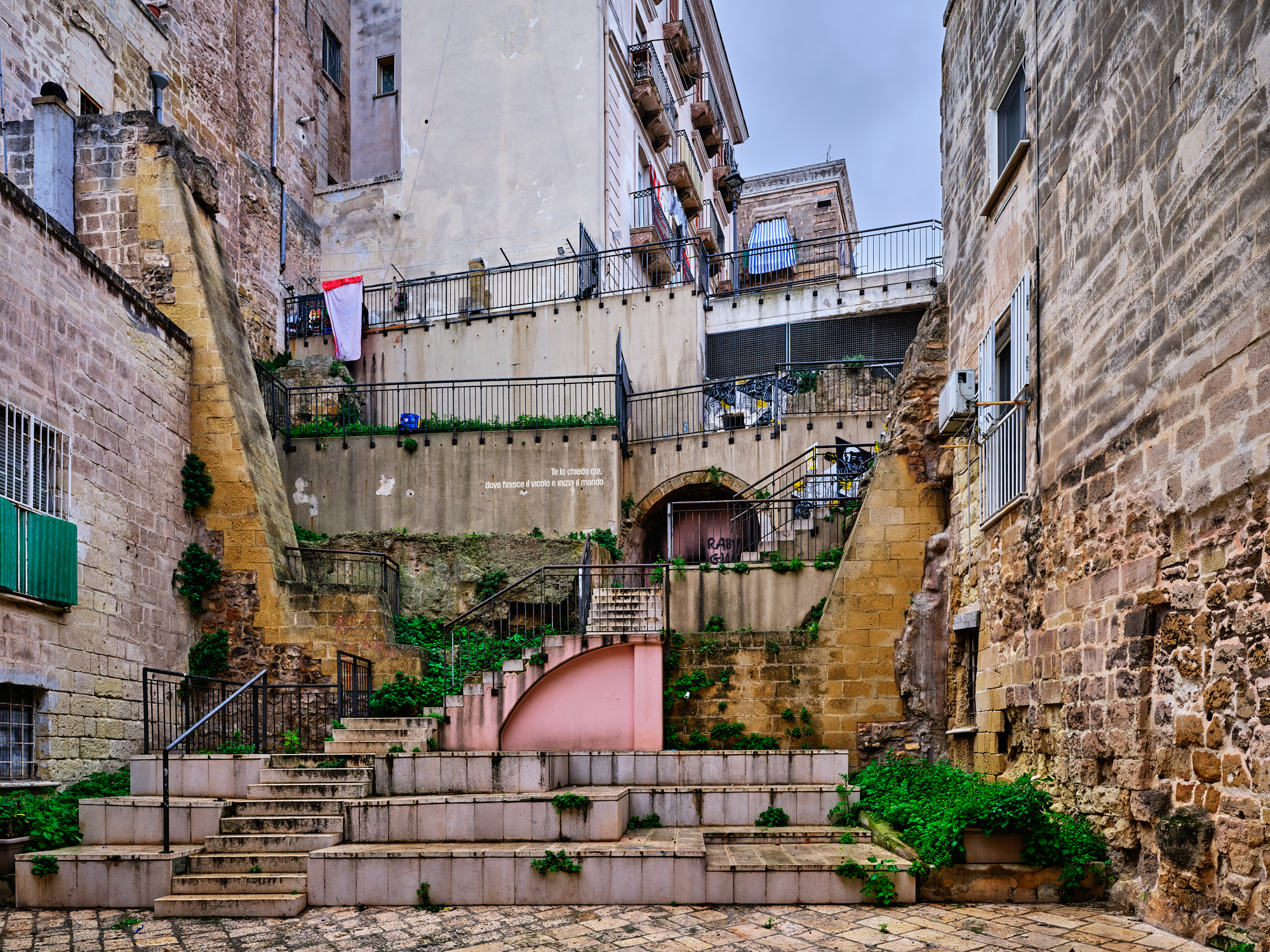
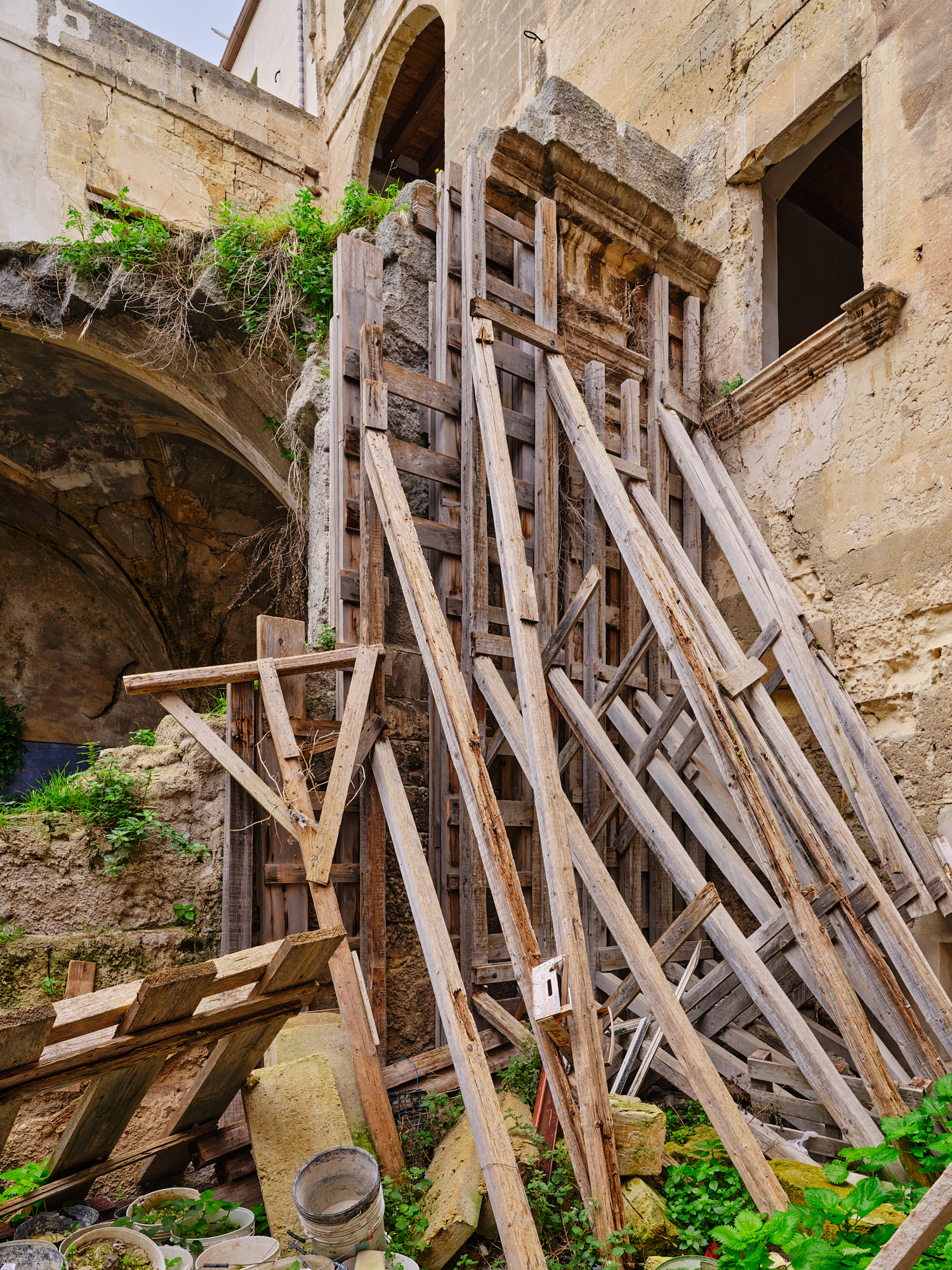
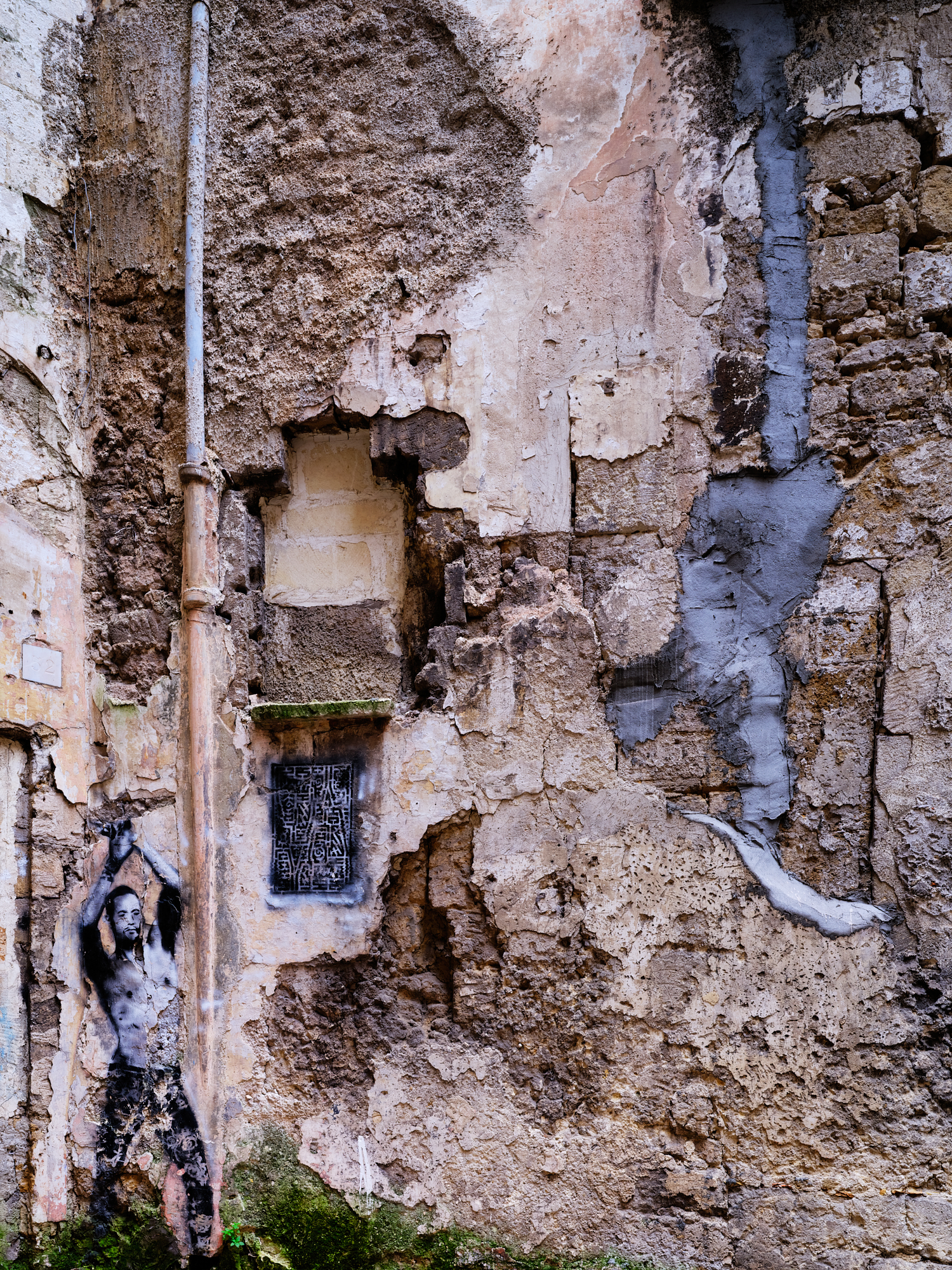
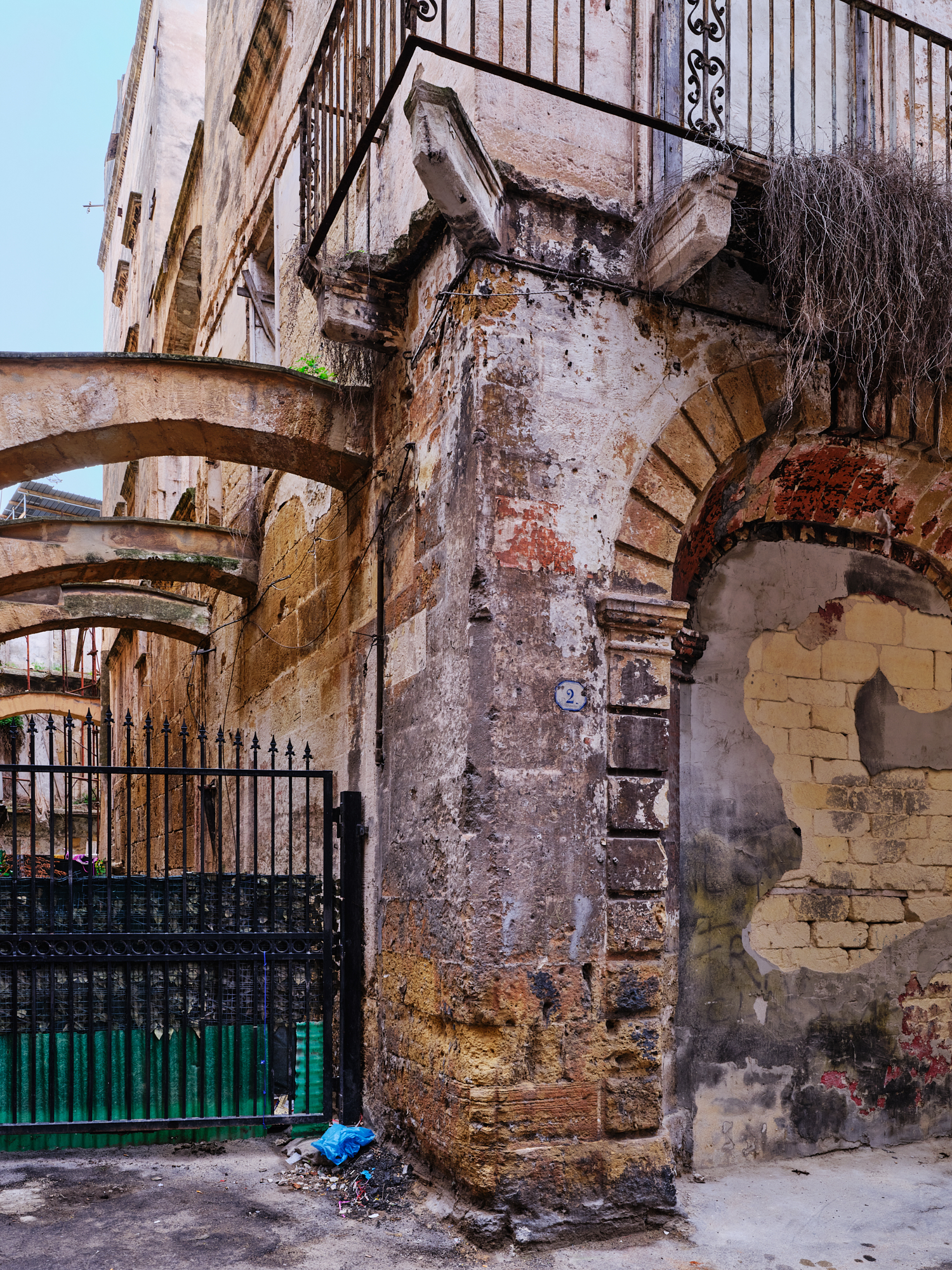
The old island heart of Taranto seems to have slipped loose from time. Once the centre of a powerful port city, it now unfolds as a landscape of shuttered façades, gutted interiors and deserted streets where the past refuses to release the present.
The decline of the Città Vecchia reflects something of Taranto’s larger history. The city experienced a period of industrial prosperity, driven by the steel industry and a belief in modernisation. Growth shifted towards the outskirts, towards factories, infrastructure and modern urban expansion. The old island city was left behind in a different reality.
In the ghostly Città Vecchia, ruins begin to resemble stage sets, and every street corner seems to carry the suggestion of a film set. The promise of progress has turned here into a long wait.